Chair: Linfei Yin, Guangxi University
Submit Now:
https://www.zmeeting.org/submission/icpst2027 and choose session 1
|
|
Linfei Yin, Ph.D., Associate Professor, graduated
from South China University of Technology in 2018. He has been
responsible for 2 National Natural Science Foundation of China projects,
1 Guangxi Zhuang Autonomous Region Youth Talents Cultivation Project, 2
Guangxi Natural Science Foundation projects, 5 open projects, and 2
horizontal projects of Digital Grid Research Institute, China Southern
Power Grid. He has participated in 1 National Key Basic Research
Development Program and 2 National Natural Science Foundation projects.
He has participated in 1 Guangxi Key Research and Development Program.
He has published 5 textbooks, among which 3 are the first author. From
2023 to 2025, he has been continuously included in the annual list of
the top 2% global top scientists and the 2024 China National Knowledge
Infrastructure (CNKI) Highly Cited Scholars TOP 5%. He has published 201
papers, including 123 SCI-indexed papers in the first/second zone of the
Chinese Academy of Sciences and IEEE journals, with an H-factor of 28.
He has published 9 teaching reform papers, obtained 88 patents,
including 65 invention patents and 1 PCT patent, and has presided over 6
teaching reform projects. He has drafted 2 enterprise standards for
China Southern Power Grid Co., Ltd. and participated in more than 10
other teaching reform projects. He received the 2025 Guangxi Artificial
Intelligence Science and Technology Award Second Prize. He serves as an
international journal reviewer 1700 times and is an excellent reviewer
of CSEE JPE. He is a member of the Power Load Technology Committee and
the Power System Security Defense and Recovery Control Technology
Committee. He is an expert in the Science and Technology and Employee
Innovation Incubator of Guangxi Power Grid Company and a member of the
Electric Load Technology Committee and the Power System Security Defense
and Recovery Control Technology Committee. He is also the technical
expert of Yantai Haiyi Software Co., Ltd. and has served as the
editor-in-chief of 7 special issues. He has received 2 second prizes and
1 third prize of the Excellent Paper Award of the Guangxi Electrical
Engineering Society, 1 first prize and 1 second prize of the
Demonstration Achievements of the Comprehensive Smart Energy Conference,
and 150 student competition awards.
|
Chair: Jianbo Jiang, Dali University; Qu Kai, Hunan First Normal University; Yuodong Yang, Dali University; Jiaxue Guo, Dali University
Submit Now:
https://www.zmeeting.org/submission/icpst2027 and choose session 2
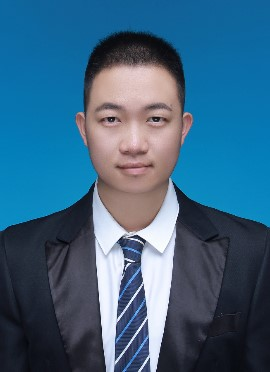 |
Jianbo Jiang, Ph.D., Associate
Professor,
Yunnan Province's "Yunnan Talents Program" Young Talent, IEEE
Member. His research focuses
on multi-distributed energy integration and control technology,
photovoltaic inverter topology and control, and flexible interconnection
technology for distribution grids.
In 2021, he obtained a Doctor of Engineering degree from the
School of Electrical Engineering and Automation at Wuhan University. He
is currently employed at the School of Engineering at Dali University.
He has published over 20 SCI/EI-indexed papers as first
author/corresponding author, and has led one "Yunnan Talents Program"
Young Talent Support Project, two Yunnan Fundamental Research Projects,
and one Dali University Doctoral Start-up Fund, with total funding
exceeding 1 million yuan.
Currently serves as a reviewer for several top-tier international
journals, including the IEEE Transactions on Industrial Electronics,
IEEE Transactions on Power Electronics, IEEE Transactions on
Transportation Electrification, and IEEE Transactions on Smart Grid.
|
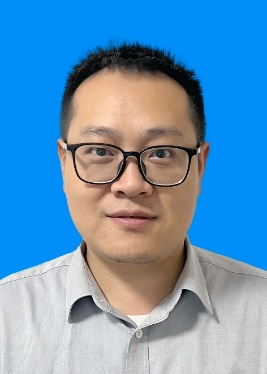 |
Qu Kai, Ph.D.,Department of
Electrical Engineering, Hunan First Normal University.Research
Interests: Power system modeling, analysis, operation and control;
optimal capacity configuration of energy storage systems.In recent
years, he has published over 10 academic papers in domestic and
international journals and conferences and applied for and obtained 3
national invention patents. He has led and participated in various
projects, including the National Natural Science Foundation of China,
the National Key Research and Development Program, the Hubei Provincial
Key Research and Development Program, the Hunan Provincial Natural
Science Foundation, the Hunan Provincial Department of Education
Projects, and the State Grid Corporation of China's Scientific Research
Projects.
|
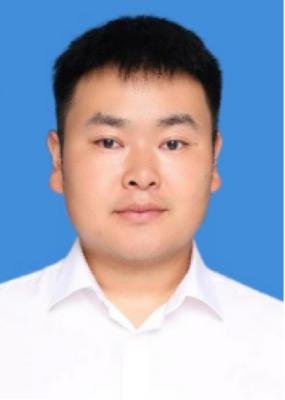 |
Yudong Yang, Master of Engineering,
Assistant Research Fellow of the College of Engineering, Dali
University. His research focuses on the grid integration and control
technology of new energy, as well as the optimization of fault
ride-through strategies for new energy power stations under grid fault
conditions. Combined with simulation modeling and experimental
verification, he explores technical paths to improve the grid
adaptability and stability of new energy power generation, so as to
facilitate the safe and efficient operation of power systems with high
penetration of new energy.
|
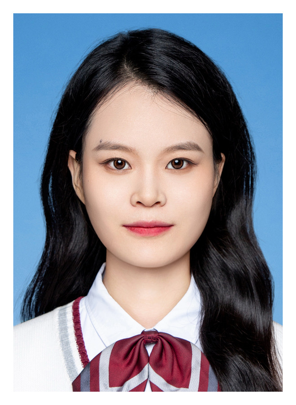 |
Guo Jiaxue, Master of Engineering, Assistant
Researcher, currently working at the College of Engineering, Dali
University. She obtained her Master of Engineering degree from the
School of Electrical Engineering and Automation, Wuhan University in
2023. Her main research focuses on the operation and intelligent
analysis of distribution networks, with research interests in the deep
learning-based feature extraction and accurate identification of voltage
sags in distribution networks under the multi-distributed energy
integration scenario, as well as the deep learning modeling for the root
cause tracing and impact quantification of voltage sags against the
backdrop of high-proportion renewable energy integration. She has
published 3 SCI/EI indexed papers as the first or corresponding author.
|
Chair: Jiayi Kong, Beijing
Institute of Graphic Communication
Submit Now:
https://www.zmeeting.org/submission/icpst2027 and choose session 3
| |
Jiayi Kong, received her B.S. degree in Electrical
Engineering from Shandong University of Science and Technology, China, in
2016; and her Ph.D. degree in Electrical Engineering from China University
of Mining and Technology, Beijing, China, in 2022. From 2019 to2021, she was
a visiting Ph.D. student supported by the China Scholarship Council in the
Department of Electrical Engineering and Computer Science, University of
California, Irvine, CA, USA.
She is currently an Associate Professor at the Beijing Institute of Graphic
Communication, Beijing, China. Her research interests include DC–DC
converters, high-power multilevel converters, modeling and control of
switching converters, and power electronics for smart grids. She has
published more than 30 academic papers and holds over 10 invention patents. |
Chair: Yiyan Sang, Shanghai University of Electric Power; Cheng Fu, Qingdao University; Chang Le, Shanghai University of Electric Power
Submit Now:
https://www.zmeeting.org/submission/icpst2027 and choose session 4
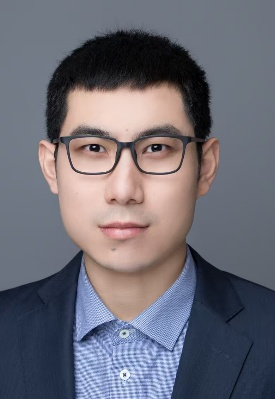 |
Yiyan Sang (IEEE Senior Member, IET Member) received
the Ph.D. degree from the University of Liverpool, UK. He is currently an
Assistant Professor with the Faculty of Electrical Engineering, Shanghai
University of Electric Power, and serves as a Master supervisor. He has been
a Visiting Scholar at the University of Strathclyde, UK. He is Principal
Investigator of NSFC Young Scientist program (Category C) and the Shanghai
Daystar Scholar Program. Research interests include renewable energy grid
integration and operation, stability and control of HVDC transmission
systems, and intelligent observation and sensing technologies for new power
systems. He has published over 30 peer-reviewed SCI papers. He also serves
as IEEE PES China Intelligent Grid & Emerging Technologies Committee Energy
Cyber Society System Subcommittee standing director, Scientific Reports
editorial board member, Digital Twins and Applications & Energy Engineering
young editorial board member, reviewer of multiple SCI academic journals.
|
 |
Cheng Fu is a Distinguished Professor and Associate
Professor at Qingdao University, Leader of the Shandong Provincial Youth
Innovation Team. He received his Ph.D. from the School of Control Science
and Engineering at Shandong University. His research focuses on the control
of power converters. Dr. Fu has authored over 30 journal papers,, with 22
publications in IEEE Transactions and China Excellence Journals. He has
directed several research grants, including the Young Scientists Fund of the
National Natural Science Foundation of China (NSFC), the Shandong Provincial
Youth Innovation Technology Support Plan, and the China Postdoctoral Science
Foundation.
|
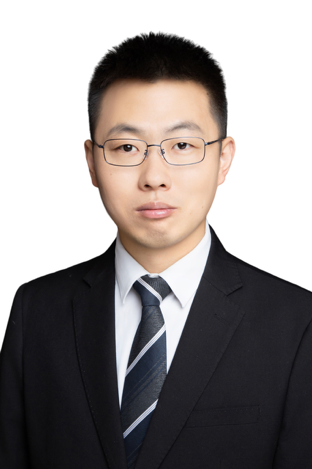 |
Le Chang is a Lecturer at the School of
Electrical Engineering, Shanghai University of Electric Power. Dr. Chang
serves as a Youth Assistant Editor for PCMP and is a Member of IEEE, the
Chinese Association of Automation (CAA), the Chinese Institute of Command
and Control (CICC), and the Chinese Society for Electrical Engineering
(CSEE). The research focuses on the nonlinear control of renewable energy
systems and the analysis and design of complex networks. Dr. Chang has
published 20 papers in related academic journals and conferences.
|
Chair: Xioashun Zhang, and Kun Zhang, Foshan
Graduate School of Innovation, Northeastern University;
Submit Now:
https://www.zmeeting.org/submission/icpst2027 and choose session 5
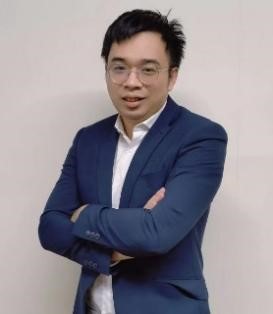 |
Xioashun Zhang, is an Associate Professor and Ph.D. Supervisor at the Foshan Graduate School of Innovation, Northeastern University. He serves as a member of the Youth Work Committee of the 8th Council of the China Electrotechnical Society, a member of the Artificial Intelligence and Electrical Applications Committee of the same society, member of the Guangdong Young Scientists Association. Additionally, he holds the position of Deputy Secretary General in both the Power Load Technology Subcommittee of the IEEE PES Smart Buildings, Loads, and Customer Systems Technical Committee (China) and the Intelligent Systems Technology Subcommittee of the IEEE PES Power System Analysis Methods Technical Committee (China). Prof. Zhang is also a member of the Guangdong Young Scientists Association.
His research interests include artificial intelligence and power grid dispatch and control, electric carbon measurement and applications, and generation control of renewable energy. From 2021 to 2025, he has been consecutively listed among the top 2% of scientists globally. From 2023 to 2024, he was consecutively recognized as a Highly Cited Chinese Researcher by Elsevier. He is an Associate Editor for the journal "Protection and Control of Modern Power Systems", and serves as a Youth Editorial Board Member for both "Energy Engineering" and "Smart Construction and Sustainable Cities" journals. |
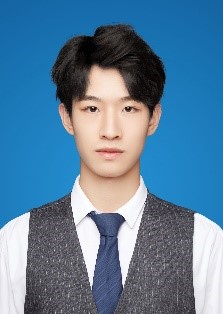 |
Kun Zhang, is a Ph.D at the Foshan Graduate School of
Innovation, Northeastern University. His research interests focus on power
grid operation control and dispatch, development and application of
intelligent algorithms, and system optimization of renewable energy.
|
Chair: Minwu Chen, Southwest Jiaotong University; Kang Li, University of Leeds; Shaofeng, South China University of Technology; Yingdong Wei, Tsinghua University; Yinyu Chen, Southwest Jiaotong University.
Submit Now:
https://www.zmeeting.org/submission/icpst2027 and choose session 3
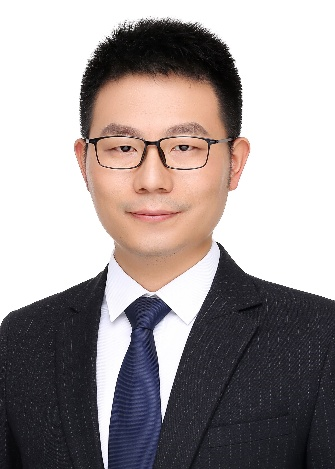 |
Minwu Chen, professor, has long been engaged in research on flexible power supply technology for electrified railways. He has been selected for the National Youth Talent Program and several provincial and ministerial talent programs. He has led multiple national-level projects, including a special topic project under the National Key Research and Development Program and projects funded by the National Natural Science Foundation of China. In the past five years, he has published 60 papers, with 31 SCI-indexed papers as the first/corresponding author, including 16 papers in top journals in his field such as eTransportation, IEEE TSG/TTE/TITS. He has received 8 science and technology awards, including the First Prize (ranked 2nd) / Second Prize (ranked 1st) of the China Railway Society Science and Technology Award, the Second Prize of the Innovation Award for Invention and Entrepreneurship from the China Invention Association (ranked 1st), and the Zhan Tianyou Railway Science and Technology Award for Railway Electrification (ranked 1st)
|
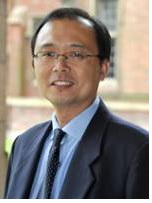 |
Kang Li, professor, holds the Chair of Smart Energy Systems and is the Director of the Institute of Communication and Power Networks at School of Electronic and Electrical Engineering, University of Leeds. A control engineer by training, Kang’s work spans from nonlinear system modelling and identification to control theory, human machine systems, AI and machine learning. But his greatest interest is in the development of holistic sensing, modelling, control, and optimization systems to support low carbon transition of different sectors. His work on the development of minimal-invasive cloud-based energy and condition monitoring platform (Point Energy Technology) has been successfully trialed in food processing and polymer processing industries, winning InstMC ICI prize 2015 and Northern Ireland INVENT 2016 award and was included in the finalist of the Sustainable Energy Awards 2016 from Sustainable Energy Authority of Ireland. In battery research, his team is among the first to develop constrained multi-objective battery charging control strategies based on coupled thermo-electric battery models and has successfully adopted Fibre Bragg Grating sensor technologies for novel battery state monitoring and estimation to improve the battery ‘transparency’. His most research interest is around the development of microgrid technology for transport and farm decarbonization in collaboration with industrial partners. In partnership with leading industrial partners in the power and transport sectors, Kang is currently leading the technological development and demonstration of Flexible Railway Energy Hubs, a novel microgrid solution to revolutionize railway decarbonization, transforming the inflexible rail demand to flexible load, and providing flexibility and ancillary services to the power grid, funded by Ofgem
SIF, EPSRC and industry, totaling over £12M current funding profile on this
topic. Kang has published over 200 journal papers and edited 18
international conference proceedings in his area, winning over 10 national
and international prizes and awards, including 2019 Springer Nature ‘China
New Development Award’ in recognition of the ‘exceptional contributions to
the delivery of the UN Sustainable Development Goals’.
|
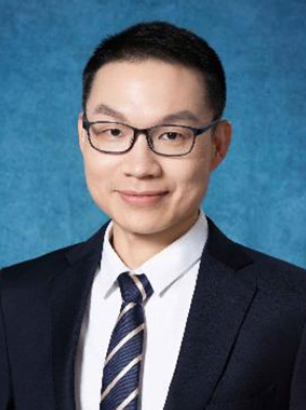 |
Shaofeng Lu, is a Professor and Doctoral Supervisor at the Shien-Ming Wu School of Intelligent Engineering, South China University of Technology. He received his Ph.D. from the University of Birmingham, UK, in 2011 and completed postdoctoral research at Nanyang
Technological University, Singapore. His core research interests include
transport-energy integration, intelligent transportation systems (ITS),
energy-efficient train control, and rail transit carbon management.
Professor Lu has led several prestigious research initiatives, including projects funded by the National Natural Science Foundation of China (NSFC) and National Key Development Plan projects. As of September 2025, he has published over 120 high-level academic papers in journals such as IEEE T-ITS and Transportation Research Part C, with an h-index of 25 with over 2600 citation numbers. He is a Fellow of the Higher Education Academy (HEA) and was honored with the 2023 SCUT Undergraduate Teaching Excellence Award.
|
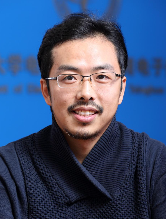 |
Yingdong Wei, His research focuses on electrified railway flexible traction power supply systems, rail transit energy internet, AC-DC hybrid power grids, and renewable energy integration. He has authored over 40 SCI-indexed papers and holds 65 authorized Chinese invention patents along with 1 European patent. As the principal technical lead, he has directed the development of several pioneering systems in China, including the first 10kV-level dynamic voltage restorer, the first fully continuous flexible AC traction power supply system (for the Beijing Daxing Airport Line), and the first flexible DC traction power supply system (for the Tianjin Jinghai
Line).
|
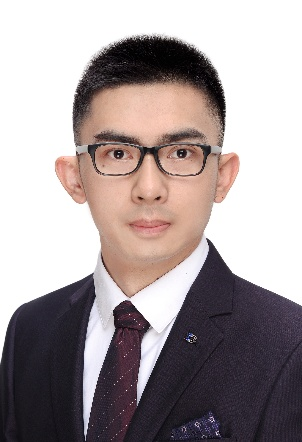 |
Yinyu Chen, Yinyu Chen is an Assistant Researcher at the School of Electrical Engineering, Southwest Jiaotong University. He obtained his Ph.D. from Southwest Jiaotong University in 2024 and previously studied as a visiting researcher at the University of Strathclyde in the UK. His main research directions include transport-energy integration, the operation and control of flexible traction power supply systems, and power quality assessment and control.Yinyu Chen is an Assistant Researcher at the School of Electrical Engineering, Southwest Jiaotong University. He obtained his Ph.D. from Southwest Jiaotong University in 2024 and previously studied as a visiting researcher at the University of Strathclyde
in the UK. His main research directions include transport-energy
integration, the operation and control of flexible traction power supply
systems, and power quality assessment and control.
He has led multiple provincial and ministerial-level research projects, including the National Natural Science Foundation of Young Scientists Fund (Category C) and the Sichuan Provincial Postdoctoral Research Project Special Funding. He has published over 20 academic papers in top international journals such as IEEE TSG, TTE, TITS, and eTransportation, with an h-index of 12. He has received numerous provincial and ministerial-level awards, including the Sichuan Provincial College Student of the Year, the Mao Yisheng Science and Technology Award—Special Award, the Zhan Tianyou Railway Science and Technology Award—Special Award, and the Second Prize of the China Railway Society Science and Technology Award (ranked 5th).
|
Chair: Biao He, Inner Mongolia Energy Group; Hua
Ye, Institute of Electrical Engineering, Chinese Academy of Sciences.
Submit Now:
https://www.zmeeting.org/submission/icpst2027 and choose session 3
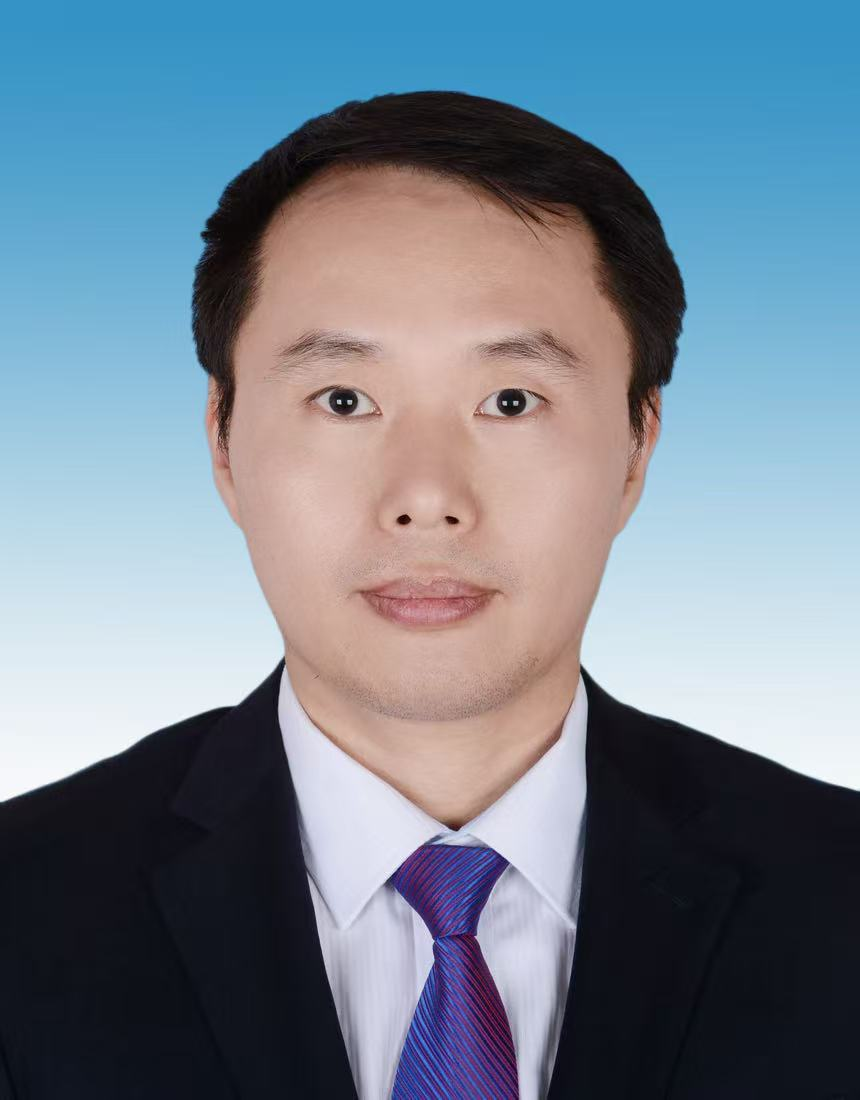 |
Dr. Biao He, Ph.D. in Electrical Engineering from Tsinghua
University and current Deputy General Manager of Inner Mongolia Energy
Group. Previously Deputy Secretary of the Party Committee, Vice Chairman,
and General Manager of Sichuan Energy Investment Integrated Energy Co., Ltd.
Currently leading sub-project research for the National Key R&D Program on
"Key Technologies for UHV Multi-terminal DC Transmission for Large-scale
Renewable Energy Bases," while spearheading numerous provincial-level
science and technology initiatives within the Autonomous Region.
|
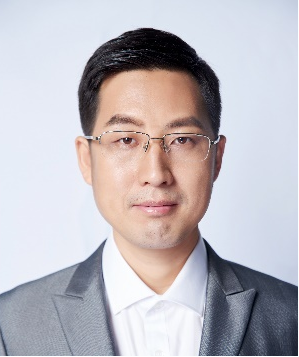 |
Ye Hua, Professor of Innovation at the
Institute of Electrical Engineering, Chinese Academy of Sciences, holds a
Ph.D. in Engineering from Technische Universität Berlin, Germany, and was a
visiting scholar at Virginia Tech, USA. His research interests include
large-scale physical energy storage, power system stability analysis, and
development of simulation and computation tools. He has led two projects
funded by the NSFC and has undertaken or participated in over 30 projects,
including those under the National Key R&D Program, the 973 Program, and
collaborations with the State Grid.
|